Specialist orthodontics — Nottingham

Braces and clear aligners for children, teenagers and adults, from two specialists on the GDC list.

New patient consultation £65, records included

Book a consultation
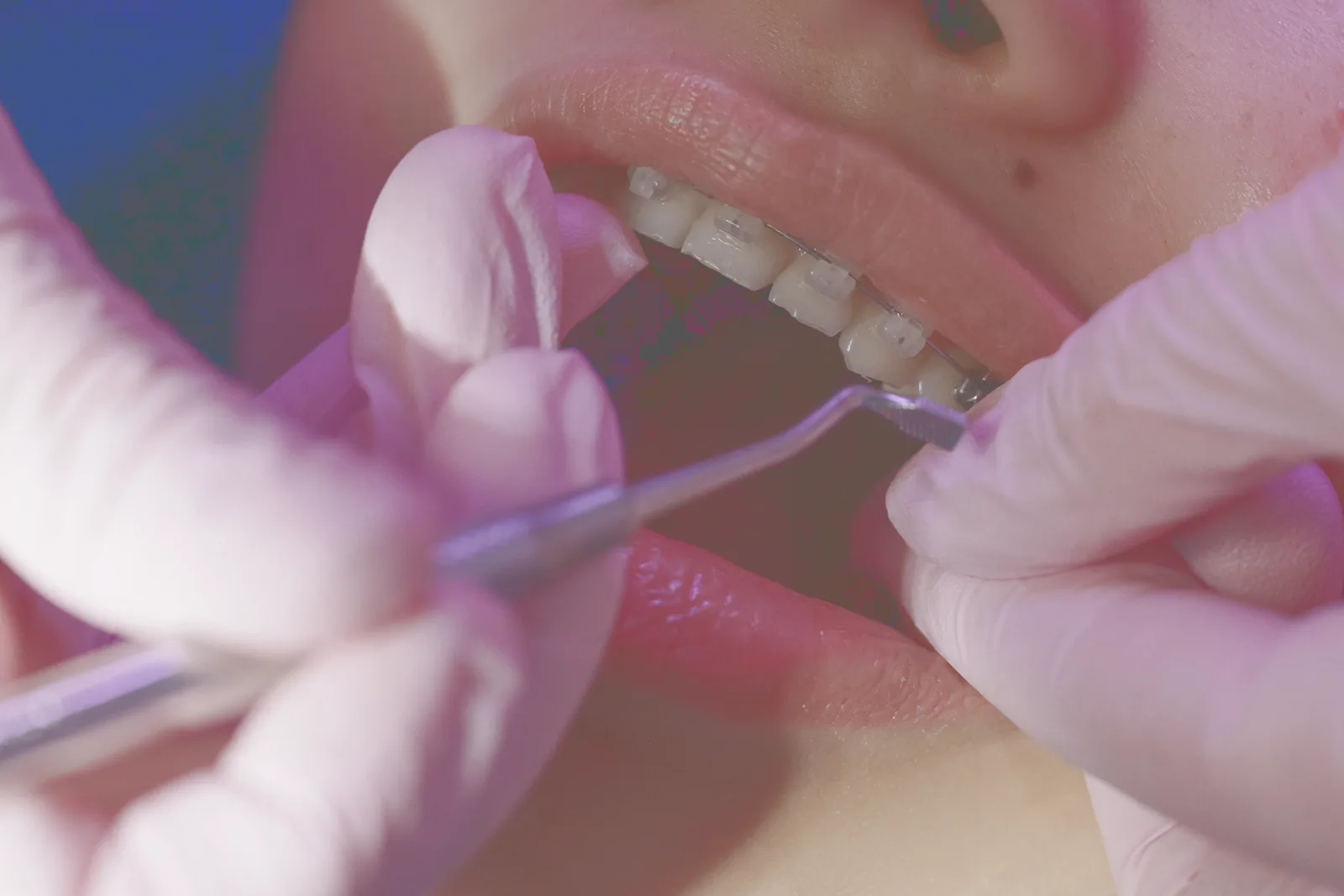
An orthodontist adjusting fixed appliances during a routine visit.

Five faults, and what each one actually is. Every heading below is set in the fault it names and corrects itself as you read past it — at the same bounded rate the tooth would move.

Arch-length deficiency

There is less room along the arch than the teeth need, so they overlap, rotate and sit out of line.

Crowding is arithmetic before it is anything else: the sum of the tooth widths exceeds the length of the arch that has to hold them. The deficit is measured in millimetres at the consult, and it decides everything that follows — under about 4 mm we can usually create the space by expanding the arch or reducing enamel contacts, and above it we are talking about extractions.
Crowding in detail from £2,650, typically 18 to 24 months

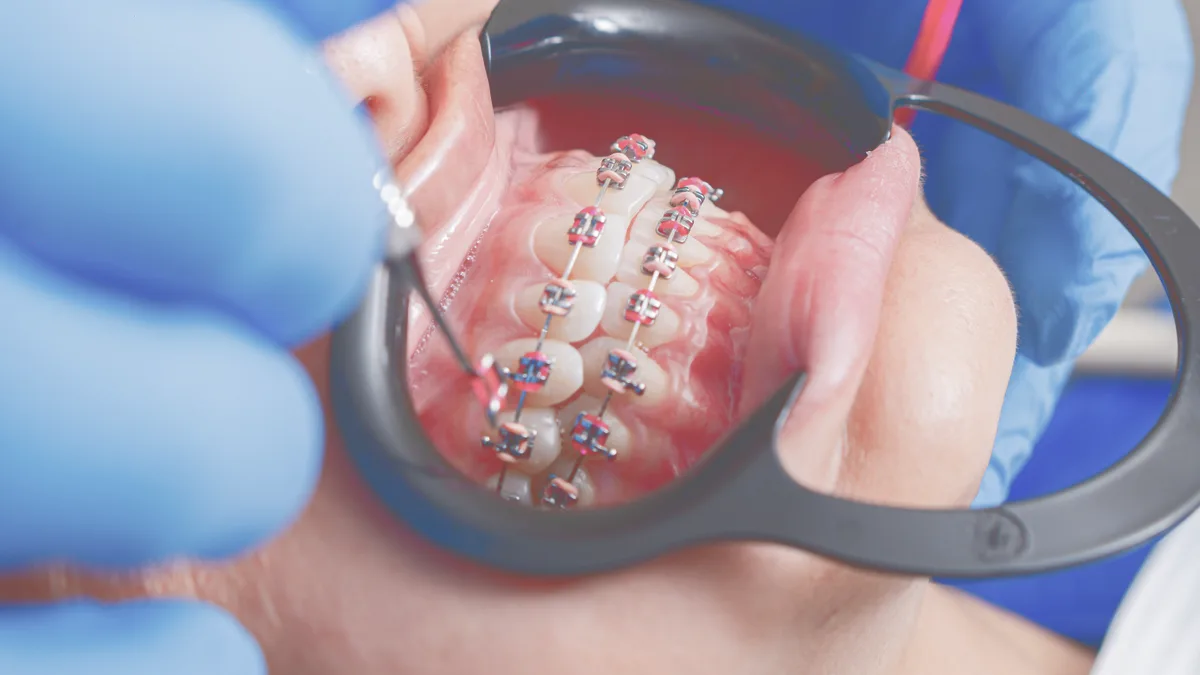
Close-up of fixed orthodontic brackets being adjusted with an instrument.

Generalised spacing / midline diastema

The opposite problem: more arch than teeth, so gaps open — most often the one between the upper central incisors.

A midline diastema in an adult is usually a mismatch between tooth size and arch size, sometimes held open by a thick labial frenum. Closing it is straightforward; keeping it closed is not, because the tissue that opened it is still there. That is why every spacing case here leaves with a bonded retainer, and why we say so before you start rather than after.

Spacing and diastema in detail from £1,950, typically 6 to 11 months

Axial rotation

A tooth turned about its own long axis. It looks like a small fault and it is one of the more stubborn ones.

Derotating a tooth stretches the supracrestal gingival fibres around it, and those fibres remodel far more slowly than bone does. The tooth is straight months before the fibres have accepted that it is straight, which is why rotations relapse more than almost anything else we correct, and why some of them get a fibrotomy.

Rotated teeth in detail from £2,450, typically 14 to 20 months

An orthodontist examining fixed appliances on a patient during an adjustment.

Increased overbite / curve of Spee

The upper incisors cover too much of the lower ones. The occlusal plane is not level, and levelling it is the whole of phase one.

A deep bite is usually over-eruption of the lower incisors, which shows up as an exaggerated curve of Spee — the front of the lower arch sits higher than the back. Levelling that curve is the first phase of fixed-appliance treatment and it is the reason the phase is called levelling and alignment. Flatten the curve and the bite opens.

Deep bite in detail from £2,850, typically 20 to 26 months

Dental midline deviation

The dental midline does not sit under the facial midline. The whole line is off, not one tooth in it.

A midline shift is a whole-arch problem, so it is corrected as one: the arch is moved bodily rather than a tooth at a time, usually with asymmetric mechanics and often with elastics you wear yourself. Under about 2 mm most people never notice it and we will tell you so rather than treat it.

Midline discrepancy in detail from £2,200, typically 10 to 16 months

A modern dental surgery with the chair and equipment in daylight.

Teeth move at a bounded biological rate, and no appliance changes that. What an appliance changes is the size of each increment. Both headings below start from the same crowding and end in the same place; the fixed appliance gets there in six adjustments, the aligner in fourteen trays.

Fixed appliances — One adjustment every 6 weeks, about 1 mm per month

Fixed brackets and archwire being adjusted chairside.

Clear aligners — A new tray every 10 days, about 0.25 mm per tray

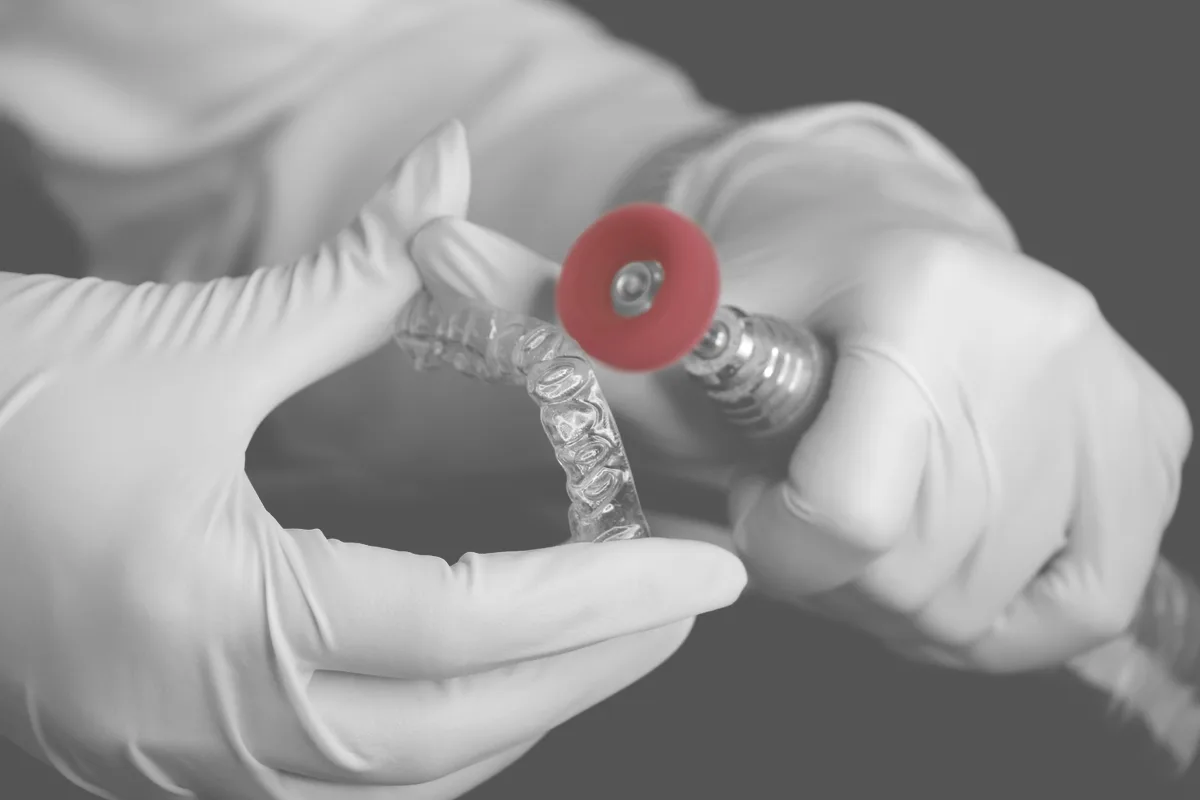
A dental technician polishing a clear aligner with a rotary tool in a laboratory.

Neither heading snaps into place, because a tooth cannot. Force arrives in increments — 6 adjustments on the left, 14 trays on the right — and each one is worth 16.7% of the fault against 7.1%. Inside an increment the correction is linear and bounded; it never jumps and it never overshoots.

Fixed appliances and clear aligners compared
  Fixed appliancesClear aligners
Increment One adjustment every 6 weeksA new tray every 10 days
Movement per increment about 1 mm per monthabout 0.25 mm per tray
Suits Rotations, extraction cases, anything that needs a tooth moved bodily rather than tipped.Spacing, mild to moderate crowding, midline correction, relapse after previous treatment.
Limits Visible. Harder to clean. Six weeks between adjustments means less of your time, not more.Only works while it is in your mouth — 22 hours a day. Rotations and bodily movement are unreliable with trays alone.
From £2,450£1,950

How each appliance works

Teeth do not stay where they are put. The fibres around them remodel far more slowly than bone does, and without a retainer they pull back toward the position they were in. Both headings below start from the same crowding and are corrected the same way. Only one of them is retained.

A bonded wire behind the lower incisors, reviewed twice in the first two years. Holds at zero.

The same treatment, no retainer. Settles back at about 28% of the original crowding — enough to see, and enough to need re-treating.

This is why retention is quoted with the treatment here and not sold to you afterwards. Every plan includes a bonded retainer on the lower arch, a removable one on the upper, and two years of retainer reviews. After that you keep wearing it at night, indefinitely, and we will keep saying so.

Replacements are priced on the fee list and are not a penalty — retainers break, and a broken retainer replaced in a fortnight costs a fraction of a relapse re-treated in a year. Ring 0115 496 0148 the day it happens.

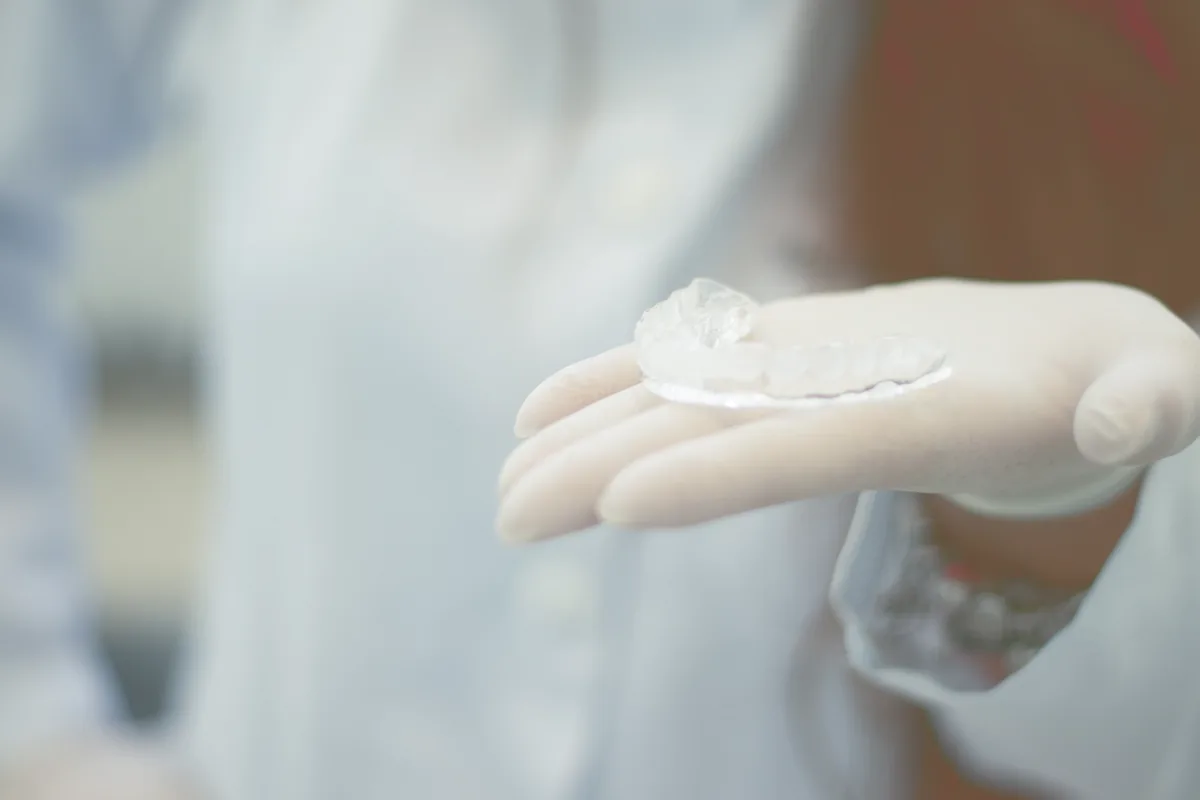
A clear removable retainer held in a gloved hand.
A removable upper retainer, as supplied at debond.

The retainer program

An ankylosed tooth is fused directly to the bone. The periodontal ligament that every other tooth moves through is gone, so there is nothing for the force to remodel and nothing happens — not slowly, not at all. Push harder and you move its neighbours instead, or you intrude the whole segment around it.

It is worth saying out loud because it is the honest half of the sales pitch: orthodontics has limits, and some of them are absolute. A tooth with a fused root, a skeletal discrepancy past the envelope of dental compensation, an adult jaw that needs surgery rather than a bracket — these get named at the consult, not discovered at month fourteen.

When we refer on

  • Skeletal Class III in an adult — joint planning with a maxillofacial surgeon.
  • Ankylosed or impacted teeth needing surgical exposure or removal.
  • Active periodontal disease — treated and stable first, always.
  • Cases where the honest answer is that the result would not be worth what it costs you.

Book a consultation or ring 0115 496 0148

One surgery, two specialist orthodontists and one therapist, on 14 Weldon Row in Nottingham. We treat orthodontics and nothing else — no hygiene, no cosmetic dentistry, no upsell.

  • Ms Ilona Radvere — Specialist orthodontist, practice principal
  • Mr Cai Brenwith — Specialist orthodontist
  • Nadia Pelham — Orthodontic therapist
  • Ruth Callaway — Practice manager

About the practice

Journal

  • What a consultation actually involves — Forty minutes, three records and a written plan. What we do, what we do not do, and why nothing is started on the day.
  • Why retainers never really end — Bone remodels in weeks. The fibres around a tooth take months, and the arch keeps changing for the rest of your life. Retention is not a warranty claim.
  • Braces or aligners: the fault decides — Both deliver force at the same biological rate. What differs is the size of each increment and what each one can physically do to a tooth.

All journal entries

Getting seen

Self-refer, or ask your dentist to refer you. Either way the first appointment is a full consultation with records, £65.

0115 496 0148
[email protected]

Book a consultation