Two ways of delivering the same force at the same bounded rate. The difference is the size of the increment, not the speed of the biology.
Fixed appliances — One adjustment every 6 weeks, about 1 mm per month
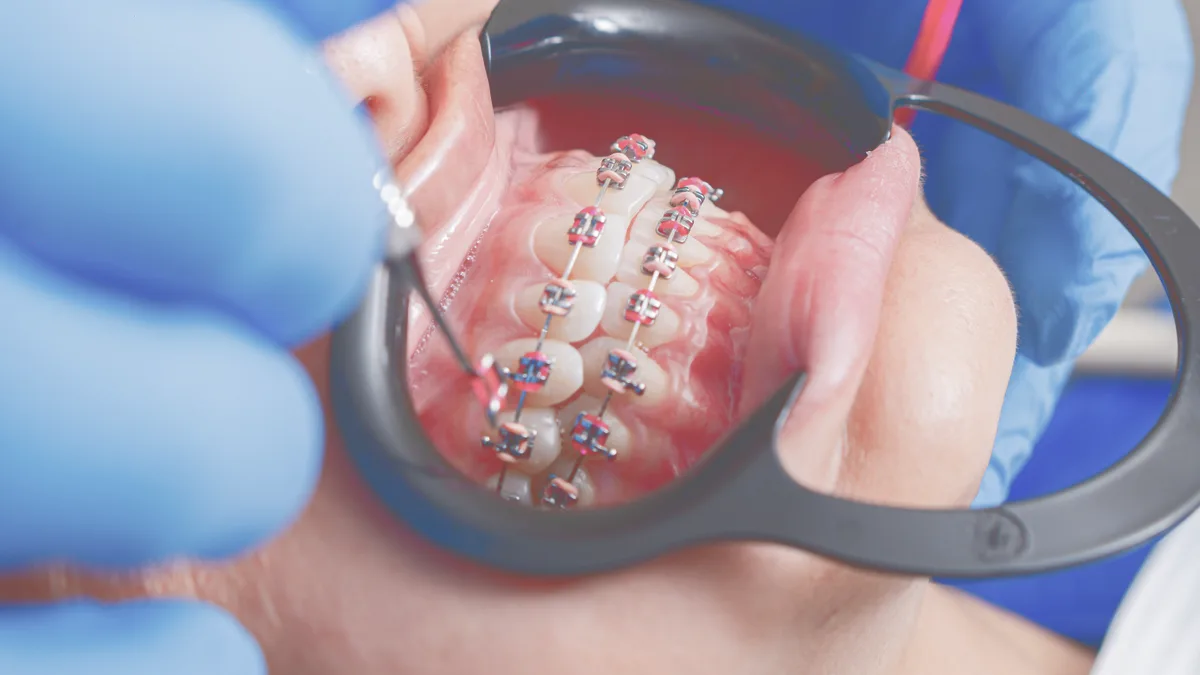
Suits. Rotations, extraction cases, anything that needs a tooth moved bodily rather than tipped.
Limits. Visible. Harder to clean. Six weeks between adjustments means less of your time, not more.
From £2,450
Clear aligners — A new tray every 10 days, about 0.25 mm per tray
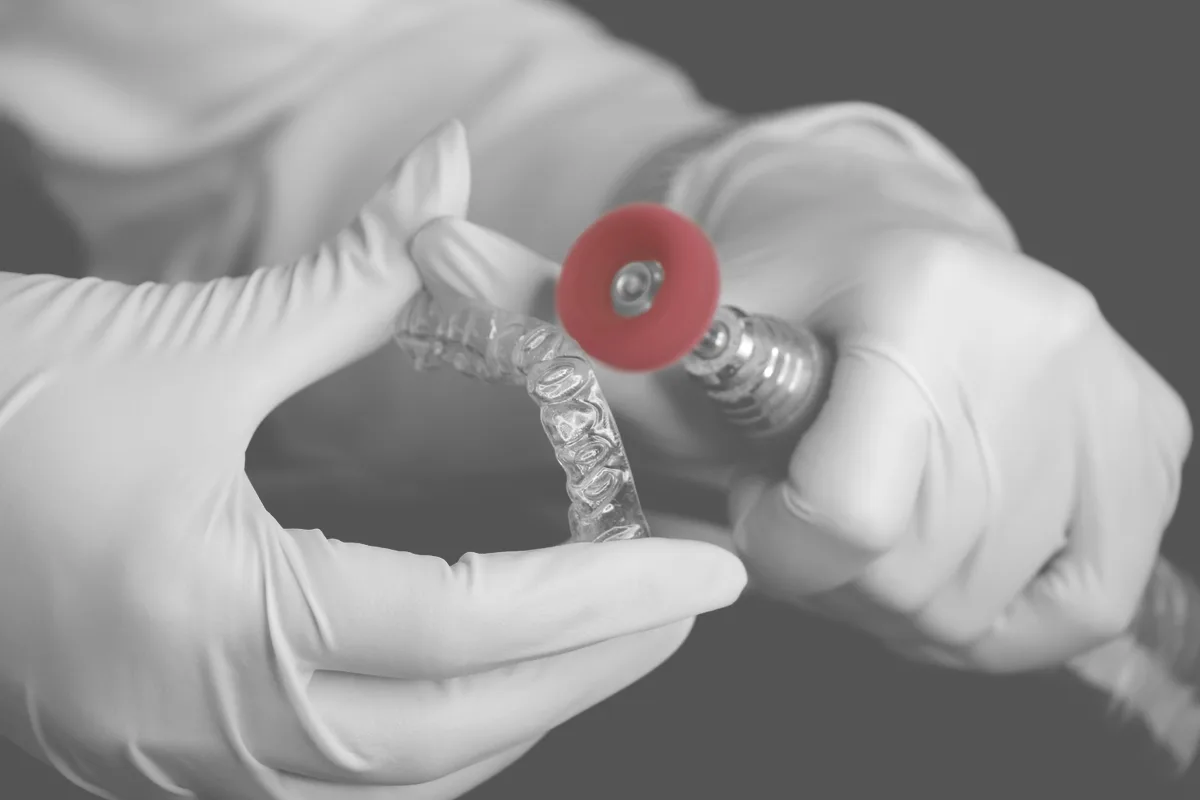
Suits. Spacing, mild to moderate crowding, midline correction, relapse after previous treatment.
Limits. Only works while it is in your mouth — 22 hours a day. Rotations and bodily movement are unreliable with trays alone.
From £1,950
Neither heading snaps into place, because a tooth cannot. Force arrives in increments — 6 adjustments on the left, 14 trays on the right — and each one is worth 16.7% of the fault against 7.1%. Inside an increment the correction is linear and bounded; it never jumps and it never overshoots.
The other difference is rest. An archwire is activated at the visit and its force decays, so movement occupies about 45.0% of the six weeks and the tooth then waits. A tray holds a much smaller force nearly constant, so about 85.0% of the wear period is movement. Fewer, larger, burstier increments against many small continuous ones — which is exactly what the two headings above do.
The stages, in order
Every case runs through the same five, whichever appliance is on the teeth. The board below is the plan, not a countdown — there is no clock on this website, because a treatment time quoted to the week is a treatment time that is going to be wrong.
- Levelling The curve of Spee is flattened and the arch is brought into line. Most of the visible change happens here.
- Alignment Rotations are corrected and the teeth are brought onto one archwire.
- Working Space is closed, the bite is corrected, elastics if the case needs them.
- Detailing Small settling movements. Nothing dramatic and it still takes months.
- Retention Debond, retainers fitted the same day, reviews at six months and two years.
Which one you get
The fault decides, not the fashion. Rotations and extraction cases go into fixed appliances because a tray cannot deliver a couple. Spacing, mild crowding and relapse go into aligners because they close predictably and you can take them out. Roughly a third of cases here run both — aligners after a short period of fixed appliances, or the other way round.
Book a consultation — £65, records included